
Managing a contact center is not just about handling incoming and outgoing calls. Behind every customer conversation, there is a team of agents, supervisors and daily activities that need to work together. As the team grows, keeping track of everyone becomes more challenging.
A supervisor may need to check which agents are available, who is currently on a call and where immediate attention is required. When this information is spread across different screens or systems, even routine supervision can take more time than expected.
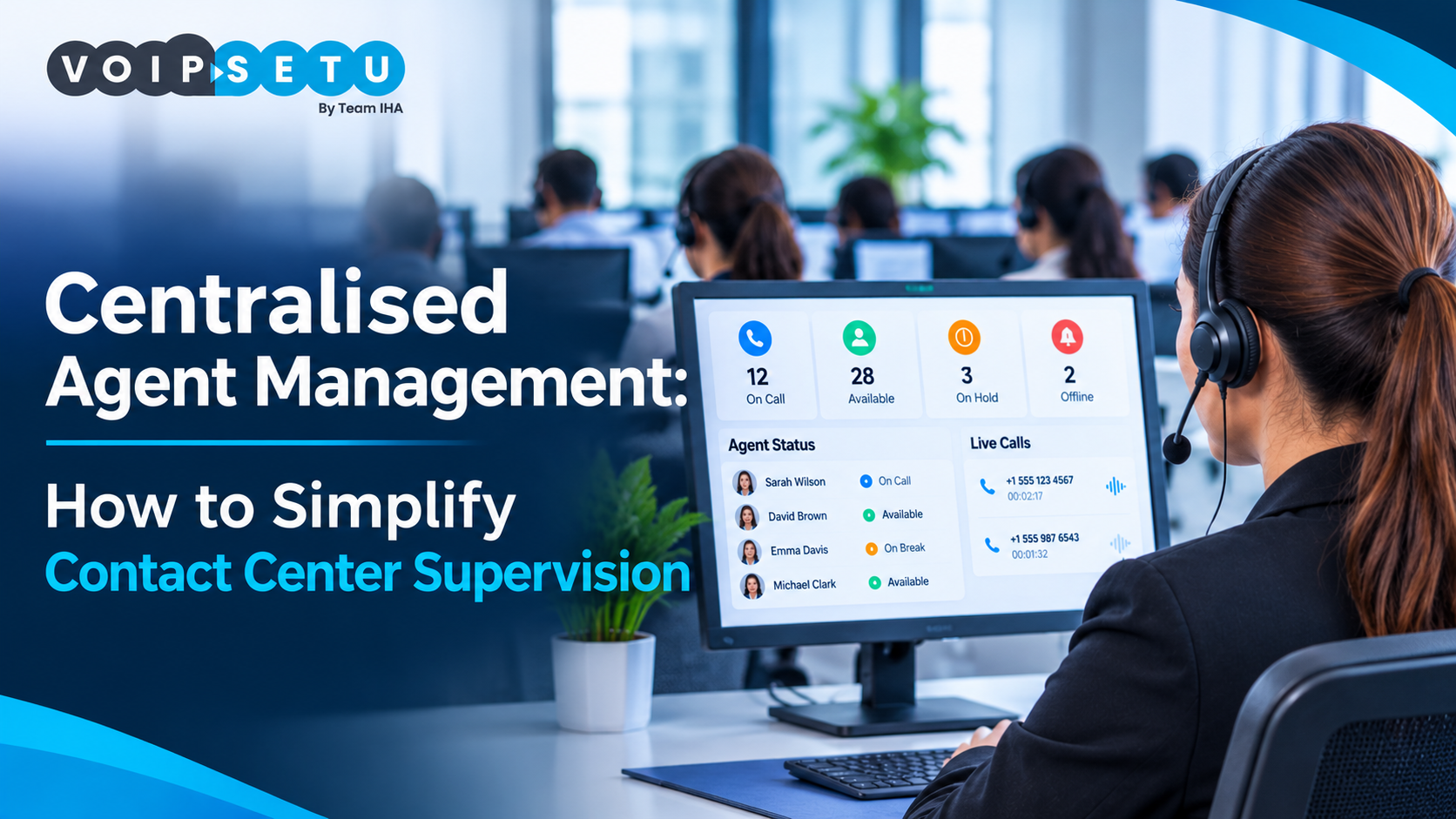
This is where centralised agent management becomes useful. It gives supervisors a more organised way to view agent activity, monitor live calls and manage daily operations from one place. Instead of handling each agent separately, supervisors get a clearer picture of what is happening across the team.
What Is Centralised Agent Management?
Centralised agent management refers to managing and monitoring multiple contact center agents through a common interface. It brings important agent-related information together, allowing supervisors to view availability, check ongoing call activity and access relevant controls without moving between different systems.
For example, imagine a contact center with 20 agents working across different extensions. A supervisor needs to know how many agents are available, who is busy handling customer calls and whether any ongoing call requires attention.
Without a centralised view, the supervisor may have to check each extension individually or rely on separate screens. A centralised system makes this information easier to access and helps supervisors understand the team's current activity.
The purpose is not simply to put everything on one screen. It is to make supervision more organised, reduce unnecessary manual effort and help managers respond to situations at the right time.
Common Challenges in Managing Multiple Contact Center Agents
Managing a small team may seem straightforward, but the situation changes when the number of agents increases. Supervisors have to keep track of several activities at once, and even small visibility gaps can affect daily operations. Here are some common challenges contact centers face.
1. Limited Visibility into Agent Availability
One of the first difficulties is knowing which agents are available at a particular moment. Some may be handling customer calls, while others may be unavailable or occupied with different tasks.
When supervisors do not have a clear view of agent status, it becomes harder to understand the team's current capacity. They may need to check individual extensions or ask for updates, which takes additional time.
2. Difficulty Monitoring Ongoing Calls
In a busy contact center, several conversations can happen simultaneously. Supervisors may need to monitor ongoing call activity, especially when a customer issue requires attention or an agent needs assistance.
Without live call visibility, supervisors may not have enough information to understand what is happening across the team. This can delay their response and make supervision less effective.
3. Managing Agents Across Multiple Extensions
As contact centers expand, agents may work through different extensions or teams. Keeping track of their activity individually can become difficult.
Supervisors may end up switching between multiple screens to check agent information. This creates an unnecessary workload and makes it harder to maintain a consistent view of daily operations.
4. Delayed Response to Operational Issues
A supervisor cannot respond to every situation immediately if the necessary information is not available.
For example, if an agent needs assistance during an ongoing call, a delay in identifying the situation may affect how quickly the supervisor can step in. Better visibility helps reduce this information gap.
Why Traditional Agent Supervision Needs to Change
Traditional supervision often depends on manual checks, separate interfaces and regular communication between agents and managers. These methods may work when a team is small, but they become less practical as operations grow.
The biggest issue is that supervisors spend time collecting information instead of using it to manage the team.
They may need to check different extensions, switch between screens or depend on updates from individual agents. By the time all the information is collected, the situation may already have changed.
This does not mean manual supervision has no value. Supervisors still need experience, judgement and direct communication with their teams. However, having the right information available at the right time makes their work easier.
A centralised approach helps bring that information together and gives supervisors a more consistent view of agent activity.
Key Features of an Effective Centralised Agent Management System
Not every contact center needs a complicated management platform. What matters is having the right visibility and controls to support daily supervision.
The following capabilities can make a meaningful difference.
1. Real-Time Agent Status Monitoring
Supervisors should be able to see the current status of their agents without checking each extension separately.
A centralised view of agent availability helps managers understand who is available, who is busy and which team members may need attention. It also makes it easier to assess the team's current activity before making operational decisions.
2. Live Call Monitoring
Agent status alone does not provide the complete picture. Supervisors also need visibility into ongoing call activity.
Live call monitoring helps them understand which conversations are currently taking place and where attention may be required. When a situation needs intervention, supervisors can use the available call controls to respond appropriately.
This is particularly useful in contact centers where multiple customer conversations happen at the same time.
3. Centralised Supervisor Controls
Supervisors sometimes need to take action during an active call. Depending on the system and permissions available, this may include controls such as call transfer, whisper, barge or other supervisory actions.
Having these controls accessible from a central interface reduces the need to move between different screens. It also gives supervisors a more direct way to manage situations that require their involvement.
4. Multi-Agent Visibility
When supervisors manage a larger team, viewing agent information individually is not always practical.
A centralised interface makes it easier to view multiple agents together. Managers can get a broader understanding of team activity and identify situations that need closer attention.
This does not replace individual agent reviews. Instead, it gives supervisors a starting point for managing the entire team more effectively.
5. Better Coordination Between Agents and Supervisors
Good supervision depends on more than monitoring. Agents should also be able to receive timely assistance when they face a difficult customer interaction or an unexpected call situation.
When supervisors have access to agent status and live call information, they can understand where support may be needed and coordinate their response more efficiently.
How Centralised Agent Management Improves Contact Center Supervision
The real value of centralised agent management becomes clear in everyday operations. It helps supervisors spend less time searching for information and more time managing the situations that matter.
Better visibility across the team: Supervisors can understand agent availability and current call activity from a common interface. This makes it easier to keep track of daily operations.
Faster supervisory response: When relevant information is readily available, managers can identify situations that require attention without going through several manual checks.
More organised monitoring: A centralised view reduces the need to check agents one by one. It creates a more consistent approach to monitoring team activity.
Improved coordination: Supervisors can use agent status and live call information to understand when support may be required and respond accordingly.
Less manual effort: Bringing important information together reduces repetitive checking and unnecessary switching between interfaces.
These improvements may seem small individually, but together they can make daily contact center supervision considerably easier.
How VoIPSetu Simplifies Agent Management and Supervision
Having a clear view of agent activity is important, but supervisors also need practical tools to manage live operations.
VoIPSetu provides Live Call & Agent Control capabilities designed to give supervisors better visibility and control over contact center activity.
Through its centralised interface, supervisors can monitor live call activity, view agent status and availability, and access available supervisor call controls. This helps them understand what is happening across the team without depending entirely on separate screens or manual updates.
For example, when several agents are handling customer calls simultaneously, a supervisor can use the available visibility to check their activity and identify situations that may require attention. If an active call needs supervisory involvement, the relevant call controls can help the supervisor respond.
Rather than treating agent monitoring and call management as separate activities, VoIPSetu brings these capabilities into a more organised workflow.
For contact centers looking to simplify daily supervision, this can make it easier to manage multiple agents while maintaining visibility into ongoing operations.
Best Practices for Effective Contact Center Supervision
Technology can make supervision easier, but the way a contact center uses it also matters. A few practical habits can help managers get better results from their agent management process.
1. Keep Agent Availability Visible
Supervisors should regularly review agent status to understand the team's current availability. This helps them stay aware of how many agents are available to handle customer interactions.
2. Monitor Live Activity When Required
Continuous attention to every conversation may not always be necessary. However, supervisors should have access to live call information when a situation requires their involvement.
3. Establish Clear Supervisory Processes
Agents should know when and how to request help from supervisors. Clear communication reduces confusion and helps teams handle difficult situations more effectively.
4. Use Centralised Tools Consistently
Switching between different tools for routine checks can create unnecessary work. Using a common interface for agent visibility and call controls helps maintain a more organised workflow.
5. Balance Monitoring with Agent Independence
Effective supervision does not mean controlling every action an agent takes. Supervisors should provide guidance when needed while allowing agents enough independence to handle regular customer interactions.
Conclusion
As contact centers grow, managing agents individually becomes increasingly difficult. Supervisors need a clear understanding of agent availability, ongoing calls and situations that require attention. Relying only on manual checks and separate interfaces can make this process slower and less organised.
Centralised agent management offers a more practical approach. It brings important information together, improves visibility across the team and gives supervisors access to the tools they need for daily operations.
With capabilities such as Live Call & Agent Control, VoIPSetu helps contact centers simplify agent supervision and manage live activity through a centralised interface.
Better supervision starts with knowing what is happening across your team. When supervisors have the right visibility and controls, managing daily contact center operations becomes easier.
FAQs
Why is centralised agent management important for contact centers?
It helps supervisors manage growing teams more efficiently by reducing manual checks, improving agent visibility and making important information easier to access.
How does real-time agent monitoring improve supervision?
Real-time monitoring helps supervisors understand current agent availability and activity. This allows them to identify situations that may need attention and respond with better awareness.
Can centralised agent management help manage large contact center teams?
Yes. A centralised interface makes it easier to view multiple agents together, reducing the effort involved in checking individual extensions and helping supervisors maintain visibility as teams expand.
How does VoIPSetu support contact center supervision?
VoIPSetu offers Live Call & Agent Control capabilities that allow supervisors to monitor live call activity, view agent status and availability, and access available supervisor call controls from a centralised interface.
Something to sit with
If your 3CX could quietly tell you the one thing it's seeing right now — would you want to know?
VoIP Setu is built by people who've sat in the supervisor seat. No pitch, no pressure — just a 20-minute walkthrough on your own SC tier, and you decide.